In the complex tapestry of South Africa’s local government praxis, the resurgence of reliable water supply in Ngwathe Local Municipality’s Sisulu section stands as a compelling affirmation of transformative public administration. Residents, long subjected to the indignities of intermittent supply and reliance on makeshift alternatives, now witness clean water flowing from their taps—a direct outcome of targeted, hands-on intervention.
This development transcends mere operational remediation; it constitutes a fundamental restoration of human dignity, particularly for historically disadvantaged Black communities in the townships, whose lived realities continue to reflect the structural inequalities of our colonial and apartheid past.
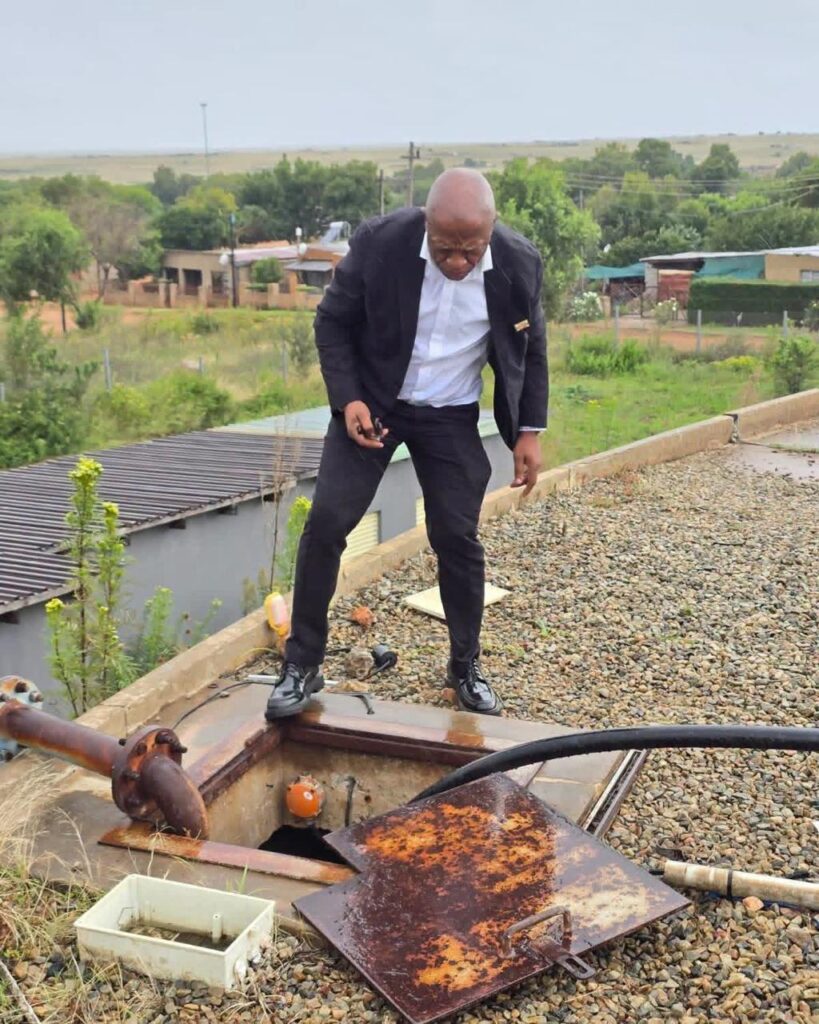
Central to this achievement is the exemplary stewardship of Municipal Manager Dr FP Mothamaha, whose pragmatic and immersive leadership has converted a protracted crisis into a demonstrable success. Operating within the strategic framework advanced under the stewardship of ANC Fezile Dabi Regional Chairperson and Executive Mayor Cllr Victoria Nolwandle De Beer Mthombeni, this administration navigated formidable objective conditions to deliver tangible relief.
Recent milestones further illustrate this momentum, including the procurement of a new municipal fleet—a critical investment in operational capacity that enhances service delivery responsiveness and marks a significant stride towards institutional renewal. Such outcomes underscore the capacity of committed revolutionary cadres to advance the National Democratic Revolution even when confronting inherited developmental deficits.
Contextual fidelity demands acknowledgment of the broader terrain. The Ngwathe administration assumed office amid a confluence of historical challenges—decades of infrastructural neglect, fiscal constraints, and the enduring spatial distortions of apartheid geography—that have tested the resilience of progressive governance across our Republic. These were not self-inflicted maladies but legacies of systemic underdevelopment disproportionately impacting Black working-class and township constituencies.
In this light, one must reflect critically on the provincial intervention culminating in the dissolution of the council. The decision by the COGTA MEC, while rooted in Section 139 imperatives, appears premature when weighed against the spectrum of supportive mechanisms available under the constitutional framework. Alternative pathways—such as targeted Section 139(1) or (4) interventions focused on capacity-building, financial recovery plans, or collaborative provincial support—could have been more constructively pursued to consolidate gains rather than abruptly dissolve the elected structure.

Dissolution, as the most intrusive measure, risks undermining the very stability it seeks to restore, particularly when tangible progress under Cllr De Beer Mthombeni’s leadership was evident in areas like water infrastructure stabilization and fleet modernization.
Notwithstanding this intervention, the administration’s record merits unqualified applause. Cllr Victoria Nolwandle De Beer Mthombeni provided resolute, people-oriented leadership that confronted legacy crises with determination and strategic foresight. Her tenure exemplifies the fusion of political accountability and developmental activism, yielding visible improvements that directly uplift the lives of the masses.
Dr Mothamaha’s direct engagement in stabilizing the Parys Water Treatment Works, alongside fleet enhancements, reflects the finest traditions of accountable cadre deployment—where theory meets practice in the arduous task of building a non-racial, non-sexist, democratic, and prosperous society. It is leadership that does not merely manage decline but actively reverses it, restoring agency to communities long marginalized.
In an era where detractors readily amplify governance imperfections while ignoring contextual realities, a mature revolutionary perspective requires us to celebrate incremental victories within the protracted struggle for social justice. The Ngwathe experience under Cllr De Beer Mthombeni’s leadership illustrates that effective municipal administration, even when constrained, can yield progressive outcomes that affirm the ANC’s historic mission.
Our people—particularly the Black majority in townships—deserve unequivocal commendation for these advances and sustained solidarity in the face of structural headwinds.
As South Africa continues its journey of democratic consolidation and radical economic transformation, let the Sisulu water restoration and associated milestones serve as an instructive paradigm. They demonstrate that real leadership is forged in adversity, measured by its fidelity to the masses, and validated by its capacity to restore dignity where it was systematically eroded.
The Ngwathe administration merits profound appreciation for this concrete contribution to the broader project of nation-building and equity. Forward to deepened service delivery and heightened developmental impact.
By Nelson “Dieta Motjhapalong” Mokoena


